FAQ Blocks
N47 Diesel Engines issues – 2010 Onwards

Are you having issues with your N47 Diesel Engine? The 1.6L & 2.0L Diesel Engines, 2010 Onwards, have a few known issues – see below:
- Timing Chain Stretch: A serious problem that can lead to catastrophic engine damage, often with a noticeable rattle during cold starts.
- EGR & Intake Issues: Common soot buildup and EGR valve problems.
- Turbocharger Wear: Typically due to extended service intervals or oil-related issues on higher-mileage engines.
- Crankshaft Bearing Wear: Caused by lack of servicing or oil issues; crankshaft pulley or dual mass flywheel failures may also trigger vibrations that accelerate wear.
- Diesel Particulate Filter (DPF) Blockages: DPF clogging is common, especially on vehicles with frequent short journeys or oil-related problems preventing proper regeneration.
N12 & N16 – ONE & Cooper Non-Turbo Engines problems
Are you having issues with your N12 & N16 – ONE & Cooper Non-Turbo Engine:
- Timing Chain Wear: Less common than N14, but still an issue—can trigger VANOS-related fault codes. Regular inspection is recommended.
- VANOS Faults: Often caused by faulty solenoids, low oil pressure, timing chain wear, or sensor failures.
- Valve Cover & Oil Leaks: Common around the valve cover gasket and oil filter housing.
- Thermostat Housing & Water Pump Leaks: Common coolant leaks that require prompt repairs to prevent overheating.
- Dropped Valve Seats: Overheating can cause valve seats to drop, resulting in severe engine damage. Keeping the cooling system in top condition is essential.
- Oil Consumption & Blue Smoke: Usually caused by worn valve stem oil seals or excessive bore wear.
N14 & N18 – Cooper S & JCW Turbo Engines issues

BMW Mini Cooper S & JCW Turbo Engines issues:
- Timing Chain Problems: Known for the “death rattle” on cold starts, caused by chain stretch or tensioner failure—especially common on early N14 models.
- Oil Consumption: Often caused by bore scoring, excessive wear, or worn valve stem oil seals.
- Turbocharger Failures: Typically due to oil starvation or blocked oil feed lines.
- Carbon Buildup: Direct injection leads to carbon deposits on intake valves, causing poor running and power loss.
- High-Pressure Fuel Pump (HPFP) Failures: Resulting in poor starting and performance issues.
- Low Oil Pressure: Can result from worn oil pumps, clogged oil pump strainers, or worn/scored camshaft journals.
- Thermostat Housing & Water Pump Leaks: Frequent coolant leaks requiring replacement parts and seals—must be addressed to prevent overheating.
Are R56 MINIs Unreliable?

What Are the Most Common MINI R56 Engine Problems?
R56 MINIs aren’t necessarily unreliable—regular servicing and preventative maintenance go a long way toward keeping them trouble-free. However, the MINI R56 (2006–2013) does have several well-known engine issues across its petrol and diesel models.
Here’s a breakdown by engine type, with links to the reliability issues for each model:
How do I prevent issues with my BMW Mini?
Preventative Tips for BMW Mini engine issues:
Regular servicing—especially more frequent oil changes and careful monitoring of coolant levels—can prevent many common MINI R56 engine problems. We recommend servicing these engines at around half the manufacturer’s recommended interval for better longevity.
Need Replacement MINI Parts?
We have stock tested used, reconditioned, and new parts for all MINI R56 engines, including:
- Timing chain kits
- Turbochargers
- Cylinder heads
- High-pressure fuel pumps
- Cooling system components.
We also supply reconditioned and used engines with warranties, available to suit your vehicle’s needs. Contact us for expert advice and the right MINI parts.
How Do I Know if a Part Will Fit My Specific MINI Model Year?
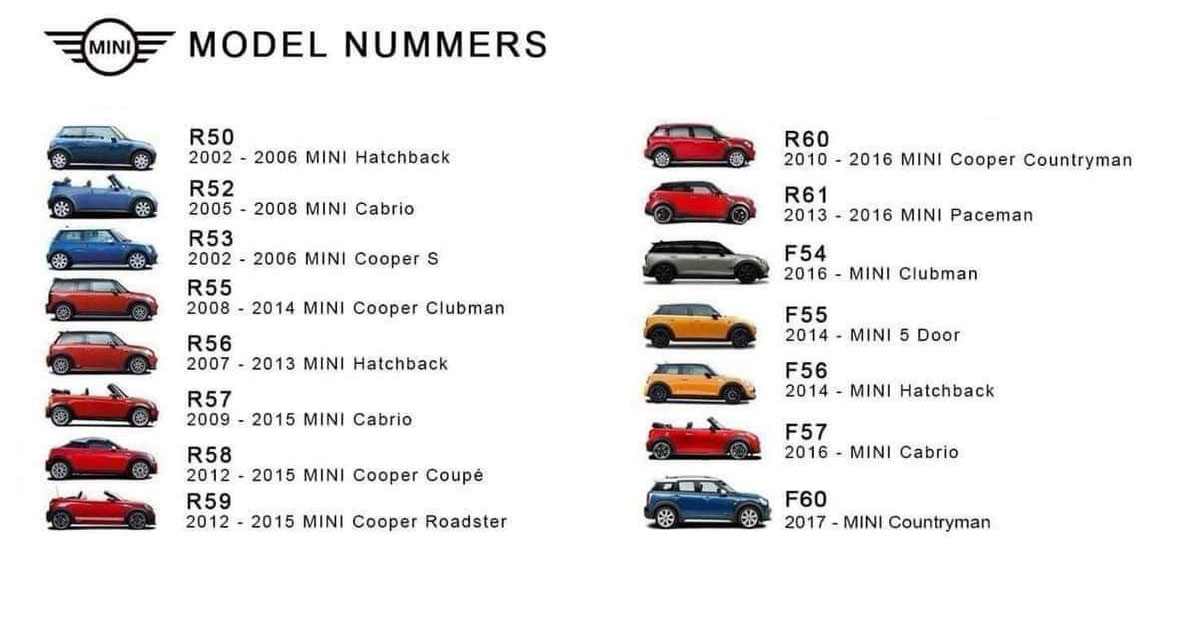
Check out the mini models identification chat.
We’re here to help — we know how difficult it can be to confidently identify the correct part for your MINI.
To ensure you’re buying the right part, it’s important to know your exact model and production year. MINI parts can vary even between cars that look similar — for example, an R56 MINI Cooper (2006–2013) may use different components than an F56 MINI Cooper (2014 onwards).
Here’s how to check part compatibility:
- Know your MINI model code (e.g. R50, R53, R56, F55, F56, R60, etc.)
- Check your registration or VIN number – we can decode this to confirm exact fitment
- Compare part numbers – we can help match OE (Original Equipment) numbers
- Contact us – our MINI specialists are happy to double-check compatibility for you.
If you’re unsure, just send us your registration number or VIN, and we’ll do the rest. We’ll make sure you get the right MINI part first time.
FAQ Blocks
N47 Diesel Engines issues – 2010 Onwards
Are you having issues with your N47 Diesel Engine? The 1.6L & 2.0L Diesel Engines, 2010 Onwards, have a few known issues – see below:
- Timing Chain Stretch: A serious problem that can lead to catastrophic engine damage, often with a noticeable rattle during cold starts.
- EGR & Intake Issues: Common soot buildup and EGR valve problems.
- Turbocharger Wear: Typically due to extended service intervals or oil-related issues on higher-mileage engines.
- Crankshaft Bearing Wear: Caused by lack of servicing or oil issues; crankshaft pulley or dual mass flywheel failures may also trigger vibrations that accelerate wear.
- Diesel Particulate Filter (DPF) Blockages: DPF clogging is common, especially on vehicles with frequent short journeys or oil-related problems preventing proper regeneration.
N12 & N16 – ONE & Cooper Non-Turbo Engines problems
Are you having issues with your N12 & N16 – ONE & Cooper Non-Turbo Engine:
- Timing Chain Wear: Less common than N14, but still an issue—can trigger VANOS-related fault codes. Regular inspection is recommended.
- VANOS Faults: Often caused by faulty solenoids, low oil pressure, timing chain wear, or sensor failures.
- Valve Cover & Oil Leaks: Common around the valve cover gasket and oil filter housing.
- Thermostat Housing & Water Pump Leaks: Common coolant leaks that require prompt repairs to prevent overheating.
- Dropped Valve Seats: Overheating can cause valve seats to drop, resulting in severe engine damage. Keeping the cooling system in top condition is essential.
- Oil Consumption & Blue Smoke: Usually caused by worn valve stem oil seals or excessive bore wear.
N14 & N18 – Cooper S & JCW Turbo Engines issues
BMW Mini Cooper S & JCW Turbo Engines issues:
- Timing Chain Problems: Known for the “death rattle” on cold starts, caused by chain stretch or tensioner failure—especially common on early N14 models.
- Oil Consumption: Often caused by bore scoring, excessive wear, or worn valve stem oil seals.
- Turbocharger Failures: Typically due to oil starvation or blocked oil feed lines.
- Carbon Buildup: Direct injection leads to carbon deposits on intake valves, causing poor running and power loss.
- High-Pressure Fuel Pump (HPFP) Failures: Resulting in poor starting and performance issues.
- Low Oil Pressure: Can result from worn oil pumps, clogged oil pump strainers, or worn/scored camshaft journals.
- Thermostat Housing & Water Pump Leaks: Frequent coolant leaks requiring replacement parts and seals—must be addressed to prevent overheating.
Are R56 MINIs Unreliable?
What Are the Most Common MINI R56 Engine Problems?
R56 MINIs aren’t necessarily unreliable—regular servicing and preventative maintenance go a long way toward keeping them trouble-free. However, the MINI R56 (2006–2013) does have several well-known engine issues across its petrol and diesel models.
Here’s a breakdown by engine type, with links to the reliability issues for each model:
How do I prevent issues with my BMW Mini?
Preventative Tips for BMW Mini engine issues:
Regular servicing—especially more frequent oil changes and careful monitoring of coolant levels—can prevent many common MINI R56 engine problems. We recommend servicing these engines at around half the manufacturer’s recommended interval for better longevity.
Need Replacement MINI Parts?
We have stock tested used, reconditioned, and new parts for all MINI R56 engines, including:
- Timing chain kits
- Turbochargers
- Cylinder heads
- High-pressure fuel pumps
- Cooling system components.
We also supply reconditioned and used engines with warranties, available to suit your vehicle’s needs. Contact us for expert advice and the right MINI parts.
How Do I Know if a Part Will Fit My Specific MINI Model Year?
Check out the mini models identification chat.
We’re here to help — we know how difficult it can be to confidently identify the correct part for your MINI.
To ensure you’re buying the right part, it’s important to know your exact model and production year. MINI parts can vary even between cars that look similar — for example, an R56 MINI Cooper (2006–2013) may use different components than an F56 MINI Cooper (2014 onwards).
Here’s how to check part compatibility:
- Know your MINI model code (e.g. R50, R53, R56, F55, F56, R60, etc.)
- Check your registration or VIN number – we can decode this to confirm exact fitment
- Compare part numbers – we can help match OE (Original Equipment) numbers
- Contact us – our MINI specialists are happy to double-check compatibility for you.
If you’re unsure, just send us your registration number or VIN, and we’ll do the rest. We’ll make sure you get the right MINI part first time.


